
Correcting poor soil structure conditions with an application of gypsum can have a significant impact on soil tilth and crop yields. However, many producers overlook this practice because they are not aware of the benefits to soil structure as well as a readily available source of calcium and sulfur.
One important aspect of gypsum is that it is soluble and reacts quickly regardless of particle size. Compare that to lime that requires time since it is not very soluble. The general practice for lime is to apply in the fall, lightly incorporate and then during the next 6 to 8 months it will dissolve and react in the soil.
The exact amount of time it takes for lime to react is based on particle size and soil moisture. Smaller particles have a high surface to volume ratio, and react faster in the soil. For powdered ag lime, particles smaller than 60 mesh will dissolve and react within 30 days. As particle size increases, the dissolution rate slows, since the particle’s surface to volume decreases as particle size increases. Particles between 30 and 60 mesh take 1 to 2 years to react, while particles between 8 and 30 mesh take as long as 5 years. Powdered ag gyp (even when pelletized) is often smaller than 100 or 200 mesh, and in addition it is soluble, so gypsum’s solubility is measured in days if moisture is available, not weeks or months as is the case with lime.
You can’t base a gypsum application on a routine soil test because it wasn’t designed to make a gypsum recommendation. A soil test measures water pH and buffer pH, and this information is used to determine a lime recommendation to correct an acid soil pH. A soil test can calculate a soil’s cation exchange capacity, and that information can be used to set a gypsum rate. A heavier soil with a higher CEC would require more gypsum than a lighter (sandier) soil with a low CEC. A routine soil test will also measure calcium and sulfur, but it doesn’t measure soil structure. Soil testing to determining a gypsum application rate is not a well-defined science yet.
Gypsum can come from several sources, including mined and synthetic by-products, and all are substantially equivalent in turns of calcium sulfate but differ in purity. What about the calcium sulfate content? Most ag gyp products contain calcium sulfate in varying amounts from 60% to greater than 95% – this is referred it as purity. Deposits often contain some limestone and other minerals.
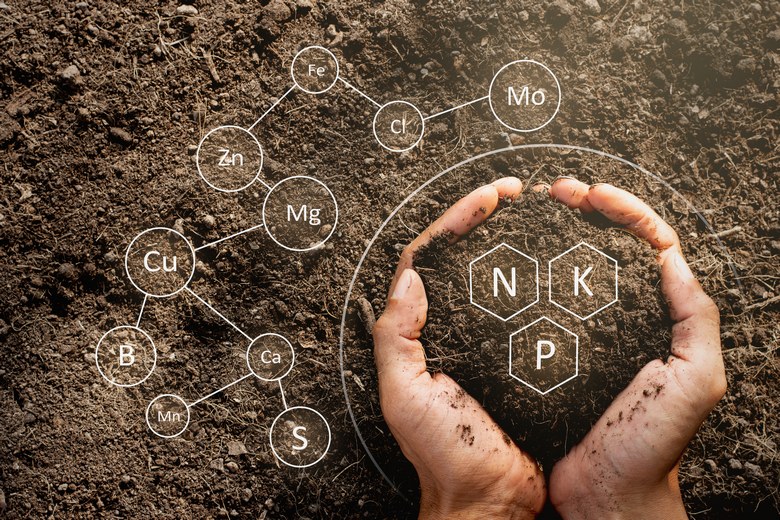
Applying gypsum as a source of calcium and sulfur and to improve soil structure is a good practice. Determining the appropriate rate depends on economics and product type. By-products are usually applied at 0.5 to 1 ton per acre every 3 or 4 years while pelletized ag gypsum is applied at 200 to 400 pounds per acre every 1 to 2 years.
When applying gypsum, it’s crucial to understand that routine soil tests alone are not sufficient for determining the correct application rate. Soil tests typically measure parameters like pH, cation exchange capacity (CEC), and nutrient levels, but they do not assess factors like soil structure or the way gypsum will impact it. For example, while a soil test can provide data on calcium and sulfur levels, it doesn’t consider how gypsum will improve soil aggregation, drainage, or overall health. Additionally, heavier soils with higher CEC will require more gypsum compared to lighter, sandier soils. Since soil structure plays a key role in how gypsum affects the soil, there’s currently no standardized formula for calculating the optimal gypsum rate based solely on a soil test. Instead, the rate is determined by a combination of soil characteristics, practical experience, and economic factors.
The source of gypsum used can also influence its effectiveness. Both mined and synthetic by-products are commonly used, with each being a form of calcium sulfate. However, their purity levels can vary widely. Agricultural gypsum typically contains calcium sulfate in concentrations ranging from 60% to 95%, and some natural deposits may include limestone or other minerals. The purity of the gypsum determines how much of the applied material will provide the desired calcium and sulfur to the soil. For application rates, by-products are generally applied at 0.5 to 1 ton per acre every 3 to 4 years, while pelletized gypsum is applied at 200 to 400 pounds per acre every 1 to 2 years. The exact application rate will depend on the soil’s specific needs and the economic feasibility of different gypsum types, ensuring the best results for your crops.
Dr. Davidson posts articles on soil management and gypsum-related subjects. If you have suggestions for topics or questions, feel free to contact him at djdavidson@goodearthminerals.net or call 402-649-5919.