
Gypsum (calcium sulfate) is a product that supplies the crop in the soil with a soluble and available form of calcium (Ca2+) and sulfur (SO42-). If these forms are deficient in soil, then crop productivity and soil will benefit if gypsum is applied. Today gypsum is sold either as ag-gyp or pelletized gypsum.
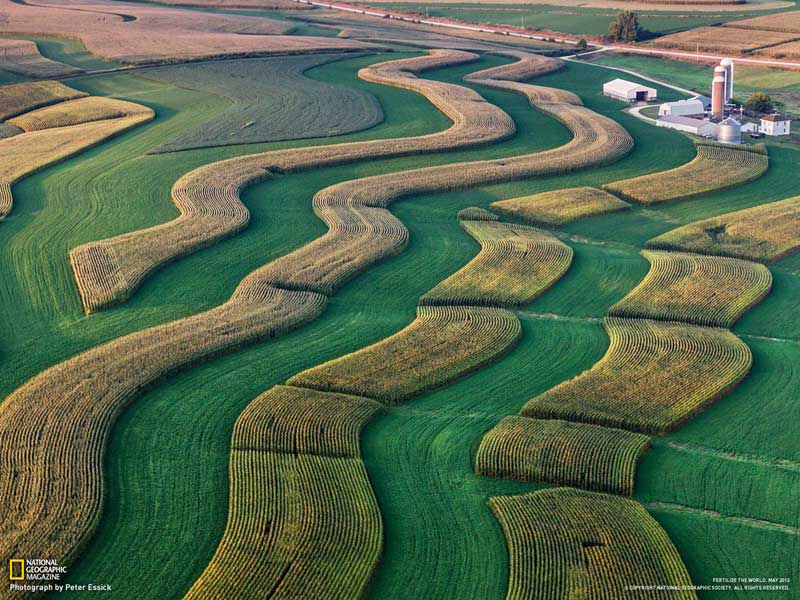
Most commercial dry soil fertilizers contain nitrogen, phosphorus, potassium and sulfur. Dry one is processed into prills, granules or pellets of a particular size and density so it can be absorbed into the soil easily. There are several advantages in creating a standardized granule, including reduced dust, ease in commercial blending, ease of handling and spreading, and these materials can be blended together without fear that materials will segregate and separate creating uneven distribution in soils.
Ag-gyp gypsum is ground down to a coarse mesh (40 to 100 mesh) and as a powder has to be spread alone using specialized broadcast spreaders built for lime. Ag-gyp cannot be blended with other fertilizers as the particle sizes are different which will lead to more ag-gyp flowing out early and more gypsum fertilizer flowing out later into the soil.
Pelletization of gypsum is done by taking quality coarse ag-gyp and finely grinding it (to 200 mesh) and adding a special binding agent to form pellets that hold together in the bin, but break down quickly under soil or field conditions. This process produces high quality gypsum pellets for easy, clean, accurate application on all soils.
Pelletized gypsum (calcium sulfate) can be easily blended with today’s dry fertilizer materials including urea, ammonium sulfate, diammonium phosphate (DAP) or monoammonium phosphate (MAP). Soil agricultural retailers with dry fertilizer plants and blenders will formulate a blend based on how many pounds of nutrients and gypsum you want per acre soil. Additionally, the gypsum pelletizing process makes it possible to blend humates, nitrogen, phosphorus and potassium and create granules with a specific analysis.
Advantages of Pelletized Gypsum in Modern Farming
The pelletization process offers significant advantages over traditional ag-gyp gypsum, especially when it comes to efficiency and ease of use. Pelletized gypsum is more uniform in size, which means it can be spread more evenly across the field. This reduces the risk of uneven distribution, ensuring that the crop receives a consistent supply of calcium and sulfur. Additionally, the pellets break down quickly under field conditions, releasing the nutrients more rapidly into the soil compared to ag-gyp, which can take longer to dissolve and become available for plant uptake.
Because pelletized gypsum is free-flowing, it eliminates many of the challenges associated with ag-gyp, such as dust and clogging in spreaders. This makes it much easier to handle and apply, even for large-scale farming operations. The ability to blend pelletized gypsum with other fertilizers, like nitrogen, phosphorus, and potassium, further enhances its flexibility. Fertilizer blends can be custom-formulated to meet the specific needs of each soil type, optimizing nutrient application for different crops. This flexibility is especially important for farmers growing a variety of crops, like corn, soybeans, and alfalfa, as it allows for tailored nutrient management strategies across different fields and growing seasons.